Our LAST professionals mixer almost FLOPPED, here's why...
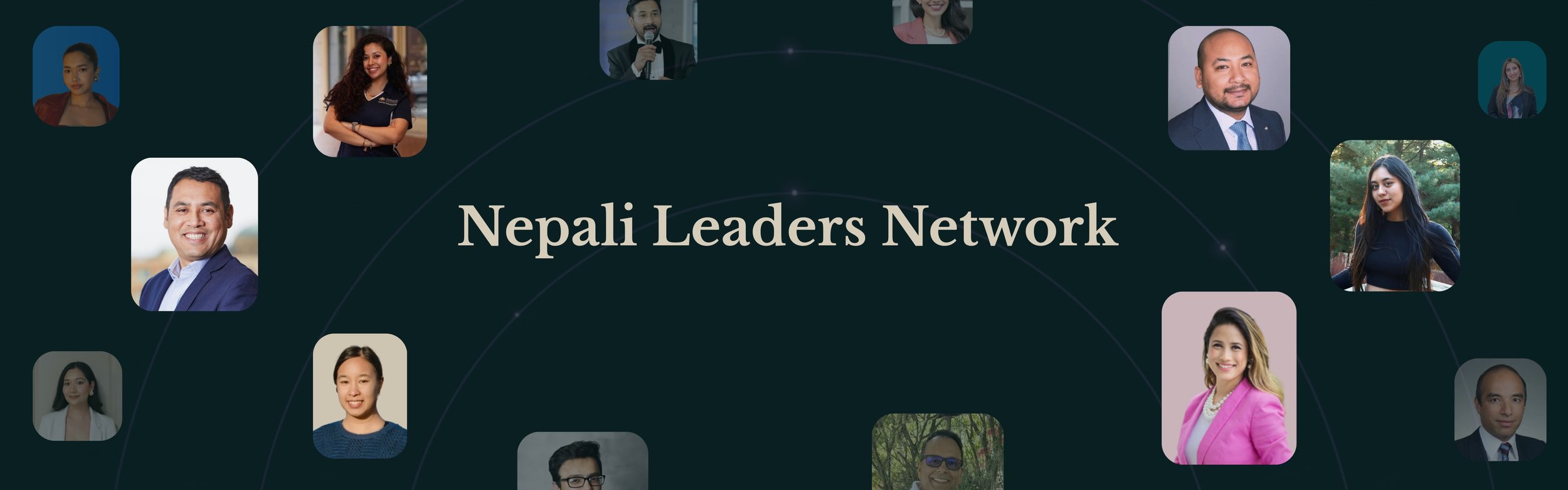
I’ll share with you why this past week has been an emotional rollercoaster for the team below…
Before I tell you why, here’s a quick rundown of what this newsletter will look like every week:
One leadership conversation we hosted,
What’s coming up next this month, and
A behind-the-scenes look at what we’re building and why
Personal Finance Advice You NEED At 18 (Not 38)
From money mistakes to long-term clarity, Sanjay Manandhar explains what he wishes he learned about money at 18, NOT in his 30s.
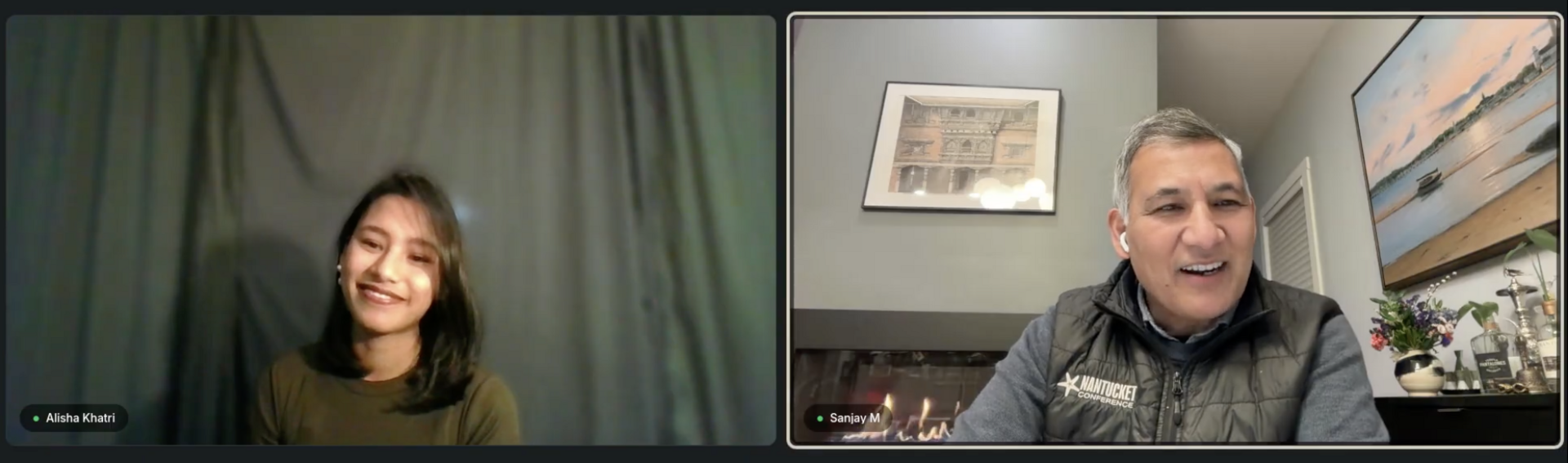
You mentioned that in your early years, you didn’t think much about money. How did that change?
In my 20s, I almost rejected money because I felt it distracted from purpose and values. I cared deeply about ideas and impact, but I didn’t understand that money is simply another system that needs to be managed. As I moved into my 30s—especially after business school and working in financial markets—I realized that ignoring money doesn’t make you principled, it makes you unprepared. Personal finance isn’t about chasing wealth; it’s about building stability so you can make better decisions over time.
You started the talk by emphasizing a “balanced life.” Why was that important in a finance discussion?
Money doesn’t exist in isolation. I think of life in layers: health first, then relationships, then education and skills, and finally wealth. Wealth matters, but only up to a point. Too little creates constant stress, and too much too quickly can distort priorities. Personal finance is about getting above that stress line so you’re not making decisions from fear or pressure.
You emphasized time and compounding as the most important factors in wealth creation. Why?
Time is the biggest advantage people underestimate. Compounding works slowly at first and powerfully over decades, which is why starting early matters more than starting perfectly. Whether it’s investing in the stock market or contributing to retirement accounts, small amounts invested consistently over long periods outperform emotional or last-minute decisions. Personal finance rewards patience, not brilliance.
You explained the Rule of 72 and warned strongly about debt. What should people take away from that?
The Rule of 72 shows how quickly something doubles—by dividing 72 by the growth rate—and that applies to debt as much as investments. High-interest credit card debt can double in just a few years, which is why it’s so dangerous. Credit cards are fine if you pay them off every month, but carrying balances means you’re letting compounding work against you instead of for you.
If you could give one piece of personal finance advice to your younger self, what would it be?
Start earlier, keep it simple, and stay consistent. Max out tax-advantaged accounts when you can, take full advantage of employer matches, invest in low-cost index funds, and don’t touch the money. You don’t need complicated strategies or perfect timing—small, disciplined decisions made over decades quietly become life-changing.
Key Takeaways
Personal finance is about long-term decision-making, not short-term wins.
Time and compounding matter more than picking the “perfect” investment.
Avoid high-interest debt early—it compounds faster than most people expect.
Stability creates clarity, and clarity leads to better decisions.
Simple, consistent habits outperform complexity over the long run.
Join Our Free Community To Watch Full Talk
Upcoming Events
1. Leadership Speaker Series ft. Kapil Mishra, Managing Partner, SpCap Group
🗓 Date: Wednesday, February 4
⏰ Time: 7:00 PM – 8:00 PM ET
📍 Location: Virtual
Kapil Mishra will give a masterclass on "How to build long-term wealth investing in real estate."
What participants will learn:
- How do you get rich in real estate with no money?
- How do you buy your first rental property step by step?
- Is real estate still a good investment in 2026?
- What’s the biggest mistake new real estate investors make?About Kapil Mishra
Kapil is the Managing Partner of SpCap Group, a commercial real estate investment firm that has held, managed, operated, andtransacted over 800 residential units as part of the company’s portfolio, with Assets Under Management (AUM) exceeding $100M.
Through SpCap, he invests alongside partners to acquire, operate, and grow income-producing properties using disciplined acquisition, asset management, and exit strategies. Before launching SpCap, Kapil built his career across banking, consulting, private equity, and treasury roles at major financial institutions. He has held various leadership roles at firms including Santander, Northern Trust, Deutsche Bank Asset Management as well as Rockland Management, Navigant, and NERA.
2. Leadership Speaker Series ft. Suman Raj Timsina, CEO, Everest Federal Credit Union | Executive Director, International Development Institute (IDI)
🗓 Date: Wednesday, February 11
⏰ Time: 7:00 PM – 8:00 PM ET
📍 Location: Virtual
Suman will break down “How to Find a High-Paying Career You Love Through Networking.”
What participants will learn:- How do you use networking to get a job or grow your career?
- What does “your network is your net worth” really mean (with real examples)?
- How do you network without feeling awkward or fake?
- How do you find a career you love and still make good money?
- How do you create new opportunities by connecting different industries?About Suman Raj Timsina
Suman Raj Timsina has 30+ years of experience across international development and financial services, with work spanning 15+ global markets.
He is the CEO of Everest Federal Credit Union (EFCU), the only U.S. federal credit union serving the Nepali diaspora, where he works on making banking and credit-building more accessible for the community.
He is also the Executive Director of the International Development Institute (IDI), leading large projects with partners like the World Bank, USAID, and GIZ that have shaped policies in education, local governance, and tourism in Nepal.
Earlier, he held senior roles in corporate banking and has worked extensively in entrepreneurship, social inclusion, disability rights, and community development, including mobilizing diaspora networks like NRNA. A Fulbright Fellow, he holds advanced degrees from the University of Pennsylvania and Jawaharlal Nehru University and is the founding President of NRNA USA.
3. Leadership Speaker Series ft. Ankit Shrestha, CEO, Kith Suppliers Inc.
🗓 Date: Wednesday, February 18
⏰ Time: 7:00 PM – 8:00 PM ET
📍 Location: Virtual
Ankit takes you behind the scenes of building a multi-million-dollar eCommerce company before turning 30, unpacking the strategies, systems, and decisions that powered its growth.
What participants will learn:
- How to build an e-commerce business from scratch
- How to engineer reliable supply chains and scalable operations
- Scaling profitably across international markets
- What to cut, keep, and double down on if starting today
About Ankit Shrestha
Ankit Shrestha is the Founder & CEO of Kith Suppliers Inc., a full-service Amazon wholesale and consulting firm operating across the U.S., Canada, and Mexico. Before turning 30, Ankit has built and scaled the company to $15M+ in total revenue, including a $2.5M peak revenue year, by building disciplined systems across sourcing, fulfillment, brand operations, and performance analytics.
Behind The Scenes
Now here’s why this past week has been a HUGE rollercoaster for the team…
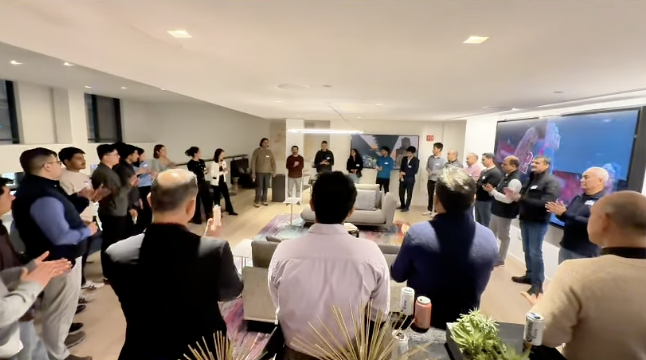
First, our first Professionals Mixer of the year.
We hosted it not knowing exactly how it would turn out (since only 20 ppl RSVP’ed until 1 before the event)… but about 50 people showed up from students, early-career professionals, directors, VPs, entrepreneurs, to investors.
We originally said this might be the last one for a while.
Now… I’m honestly reconsidering.
We’re thinking about hosting another mixer in April, BUT only if you want it.
Just reply to this email saying “yes, another one in April.”
If enough of you want it, we’ll make it happen!!
Huge shoutout to ZUZU MOMO for sponsoring the appetizers
Second, our full February Leadership Speaker Series lineup is out.
And we’re intentionally changing the format.
Instead of bigger audiences, we’re capping each session at 30 people.
The goal is to make it conversational and interactive (less webinar, more real discussion)
If you can’t attend live, we’ll still share recordings inside our free community.
(Quick heads-up: our talk with Kapil Mishra has ONLY 5 spots left for tomorrow — CLICK HERE TO RSVP)
Third, the Hackathon is starting to feel real.
We now have a full team in place, and phase-one execution is almost complete
We’ve started sharing daily BTS updates on our social channels
Applications open in the next few weeks, and I’ll let you know when they do here
This week felt like real progress and hopefully… the momentum stays!!
Anyways, now that you’re officially caught up, you can check out our website to see the full breakdown of what Nepali Leaders Network is, where we’re going, and the long-term vision behind this whole thing.
And if you haven’t already,join our free community — it’s the hub for everything: events, fellowships, networking, and all the opportunities we’re rolling out next.
More soon,
Shreyas K. Shrestha
Founder, Nepali Leaders Network
P.S. If you made it this far, you’re a real one. These newsletters might be my favorite way to stay connected to 1,100+ of you. See you back in a week!
