I have a favor to ask…
There’s a small favor I want to ask at the end of this email…
But first I want to share a quick rundown of what this newsletter will look like every week:
One leadership conversation we hosted,
What’s coming up next this month, and
A behind-the-scenes look at what we’re building and why
Inside the Mind of a Real Estate Investor with a $100M Portfolio
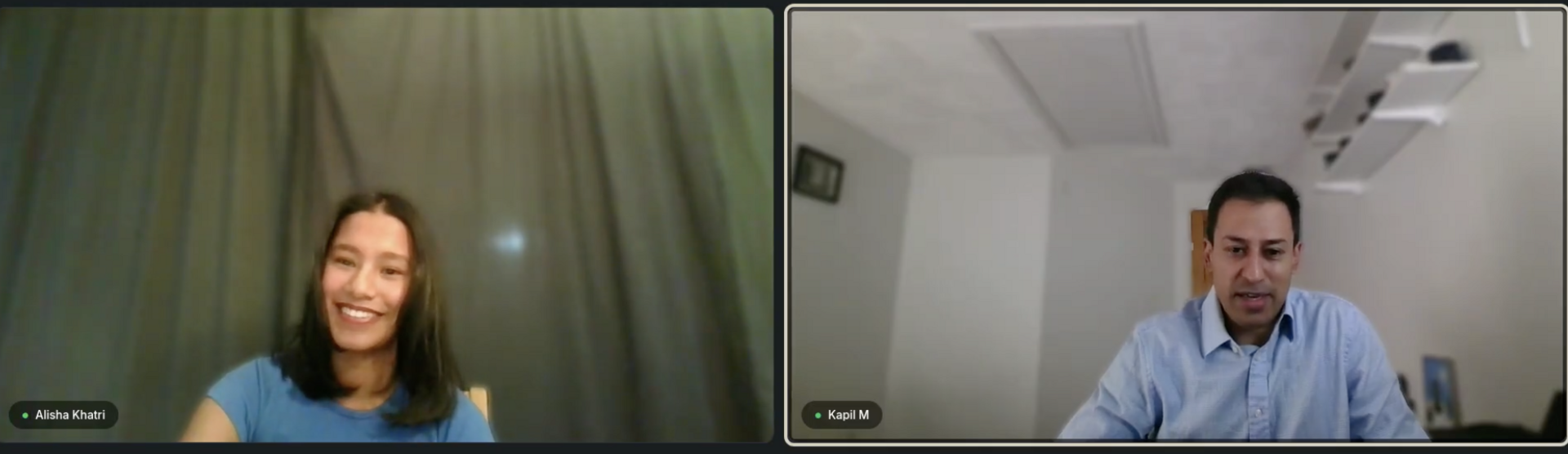
From “real estate is fast money” to “real estate is a business,” Kapil Mishra breaks down how to start, how to think, and how to avoid beginner mistakes.
1. If you were starting from zero today, what would you actually do in the first year?
The first step isn’t buying property, it’s understanding that real estate is a broad ecosystem, not just houses, and choosing where you want to play before deploying capital. For most young professionals, the most practical entry is buying a property where part of it can be rented out, not because it creates immediate wealth but because it lowers personal expenses while teaching ownership, operations, and financing in a low-risk way. If capital isn’t available, the realistic path is to become useful to someone who has it (sourcing deals, managing properties, or doing operational work in exchange for small equity) because early real estate careers are built more on access and trust than money.
2. What mindset actually works in real estate once the hype disappears?
Real estate rewards patience more than intelligence because most returns come from time, not brilliance, and many beginners underestimate how slow equity growth and meaningful cash flow really are. Experienced investors don’t chase appreciation or trends; they focus on surviving cycles, maintaining cash flow, and avoiding decisions that can permanently damage capital. The psychological shift is accepting that discomfort is normal (every acquisition feels risky) and learning to make decisions based on long-term math rather than short-term confidence or market sentiment.
3. How can someone realistically start without a lot of money?
The advantage early investors have is flexibility, not capital, which means looking outside expensive markets, targeting imperfect properties, and focusing on ways value can be created rather than hoping value already exists. Many successful early deals come from operational improvements or simple upgrades that increase income potential, not from finding “perfect” properties, and the key skill becomes recognizing where effort or better management can change outcomes. In practice, this means thinking like an operator (asking how a property can perform better) rather than thinking like a buyer hoping prices go up.
4. What mistakes consistently hurt beginners the most?
The biggest failures come from imbalance: some people wait for perfect certainty and never gain experience, while others move quickly without understanding risk and get punished when conditions change. Real estate amplifies both mistakes because leverage magnifies outcomes, so overpaying, skipping due diligence, or assuming markets will behave the same way they have in recent years can create long-term problems. The investors who last are usually not the smartest or the fastest — they are the ones who move forward while still respecting uncertainty and building teams or partnerships that counterbalance their blind spots.
5. What changed the way you understood real estate at a deeper level?
The realization that large real estate deals function like private equity fundamentally changes how you see the industry — you’re not buying buildings, you’re acquiring income-producing businesses financed by a mix of equity and debt. Once that clicks, the focus shifts away from ownership and toward systems, operations, and capital structure, which explains why people can own large apartment communities without personally owning a home. The real skill becomes coordinating capital, partners, and operations over long periods rather than simply acquiring assets.
6. If you could give one piece of advice to your younger self starting out?
When you begin deploying serious capital, especially other people’s money, fear and uncertainty are unavoidable, and many decisions feel larger than they actually are in hindsight. The lesson isn’t to eliminate risk but to keep moving forward responsibly, focusing on the next decision rather than trying to predict the entire outcome, because long-term success in real estate tends to come from staying in the game through cycles rather than making perfect calls early.
Key Takeaways
Real estate rewards durability and decision quality more than speed.
Early advantage comes from usefulness and access, not capital.
Value is usually created through operations, not discovered in listings.
Leverage magnifies both discipline and mistakes.
At scale, real estate is business ownership, not asset collection.
The people who win are the ones who stay consistent through uncertainty.
Join Our Free Community To Watch Full Talk
Upcoming Events
1. Leadership Speaker Series ft. Suman Raj Timsina, CEO, Everest Federal Credit Union | Executive Director, International Development Institute (IDI)
🗓 Date: Wednesday, February 11
⏰ Time: 7:00 PM – 8:00 PM ET
📍 Location: Virtual
Suman will break down “How to Find a High-Paying Career You Love Through Networking.”
What participants will learn:- How do you use networking to get a job or grow your career?
- What does “your network is your net worth” really mean (with real examples)?
- How do you network without feeling awkward or fake?
- How do you find a career you love and still make good money?
- How do you create new opportunities by connecting different industries?About Suman Raj Timsina
Suman Raj Timsina has 30+ years of experience across international development and financial services, with work spanning 15+ global markets.
He is the CEO of Everest Federal Credit Union (EFCU), the only U.S. federal credit union serving the Nepali diaspora, where he works on making banking and credit-building more accessible for the community.
He is also the Executive Director of the International Development Institute (IDI), leading large projects with partners like the World Bank, USAID, and GIZ that have shaped policies in education, local governance, and tourism in Nepal.
Earlier, he held senior roles in corporate banking and has worked extensively in entrepreneurship, social inclusion, disability rights, and community development, including mobilizing diaspora networks like NRNA. A Fulbright Fellow, he holds advanced degrees from the University of Pennsylvania and Jawaharlal Nehru University and is the founding President of NRNA USA.
2. Leadership Speaker Series ft. Ankit Shrestha, CEO, Kith Suppliers Inc.
🗓 Date: Wednesday, February 18
⏰ Time: 7:00 PM – 8:00 PM ET
📍 Location: Virtual
Ankit takes you behind the scenes of building a multi-million-dollar eCommerce company before turning 30, unpacking the strategies, systems, and decisions that powered its growth.
What participants will learn:
- How to build an e-commerce business from scratch
- How to engineer reliable supply chains and scalable operations
- Scaling profitably across international markets
- What to cut, keep, and double down on if starting today
About Ankit Shrestha
Ankit Shrestha is the Founder & CEO of Kith Suppliers Inc., a full-service Amazon wholesale and consulting firm operating across the U.S., Canada, and Mexico. Before turning 30, Ankit has built and scaled the company to $15M+ in total revenue, including a $2.5M peak revenue year, by building disciplined systems across sourcing, fulfillment, brand operations, and performance analytics.
3. Leadership Speaker Series ft. Dr. Smeeta Shrestha, Research Strategist, Genomics & Human Health
🗓 Date: Wednesday, March 4
⏰ Time: 7:00 PM – 8:00 PM ET
📍 Location: VirtualDr. Smeeta will break down “How to Get Started in Research as a Student or Early-Career Professional.”
What participants will learn:
- How to take your first steps into research, even without prior experience
- How to find mentors, labs, or projects to get involved in
- What research really looks like beyond classes and textbooks
- How research skills open doors across academia, industry, and policyAbout Dr. Smeeta
Dr. Smeeta Shrestha is a research strategist with over 20 years of experience in genomics and human health research. She has authored more than 25 peer-reviewed publications in leading journals, including Nature Genetics, Nature Communications, Clinical Epigenetics, and Microbiome, and has contributed to large international research collaborations spanning over five countries.
She currently works as a Research Strategist and was most recently a Senior Research Fellow at the Lee Kong Chian School of Medicine, where her research focused on linking gut health, metabolism, and disease using integrative genomics, transcriptomics, metabolomics, and metagenomics approaches. She has previously held academic and research positions at institutions including Nanyang Technological University (Singapore) and the Centre for Cellular and Molecular Biology (CSIR, India). Dr. Shrestha has recently joined Dhulikhel Hospital, Kathmandu University Hospital, as a molecular geneticist, with a vision to establish a medical genetics clinical service alongside teaching and research, contributing to the advancement of genomic medicine capacity in Nepal. She also brings extensive experience mentoring undergraduate and graduate students and early-career researchers across academic and translational research settings.
Behind The Scenes
Now let me ask for a small favor that could make a BIG impact… not just for us, but for the wider community.
Here’s a quick update first…
For our Leadership Speaker Series, we’re changing things up. Until now it’s been webinar style (aka everyone muted, cameras off, hoping people are still there).
This Wednesday we’re trying a meeting format instead. People can see each other, talk to the speaker, and actually have conversations.
We haven’t done this before, so this might go REALLY well… or we blame everything on tech lol.
This session is with Suman Raj Timsina, and we’re talking about monetizing your passion. Around 25 people are joining already, and honestly I’m personally excited for this one.
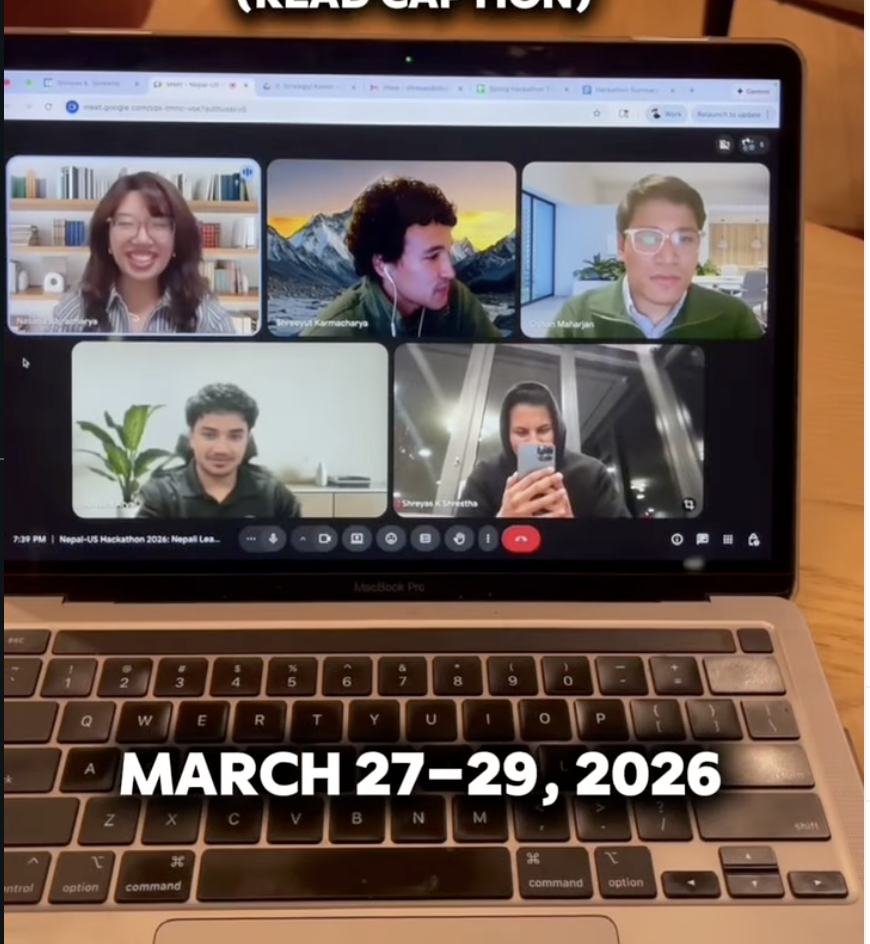
On the hackathon side… it’s been a grind.
The biggest challenge isn’t work, it’s just getting everyone aligned across time zones.
But this past week finally felt like boring but real progress. The website is live (still incomplete, so I’ll share it next week), and we’ve started onboarding judges and mentors from big tech companies.
Our target is 12 judges and 38 mentors, and NGL… we’ve onboarded around 10 so far, but we’ve also had a decent number of people say NO.
So here’s the small favor.
If you are, or know someone with, 5 to 7+ years in tech or startup experience and open to mentoring, just reply to this email.
I really believe this hackathon can bring the Nepali tech community together and show what we can do globally.
The goal is big. 300+ people. All 50 states.
Can we pull it off? Honestly… fingers crossed.
Anyways, now that you’re officially caught up, you can check out our website to see the full breakdown of what Nepali Leaders Network is, where we’re going, and the long-term vision behind this whole thing.
And if you haven’t already,join our free community — it’s the hub for everything: events, fellowships, networking, and all the opportunities we’re rolling out next.
More soon,
Shreyas K. Shrestha
Founder, Nepali Leaders Network
P.S. If you made it this far, you’re a real one. These newsletters might be my favorite way to stay connected to 1,100+ of you. See you back in a week!
